
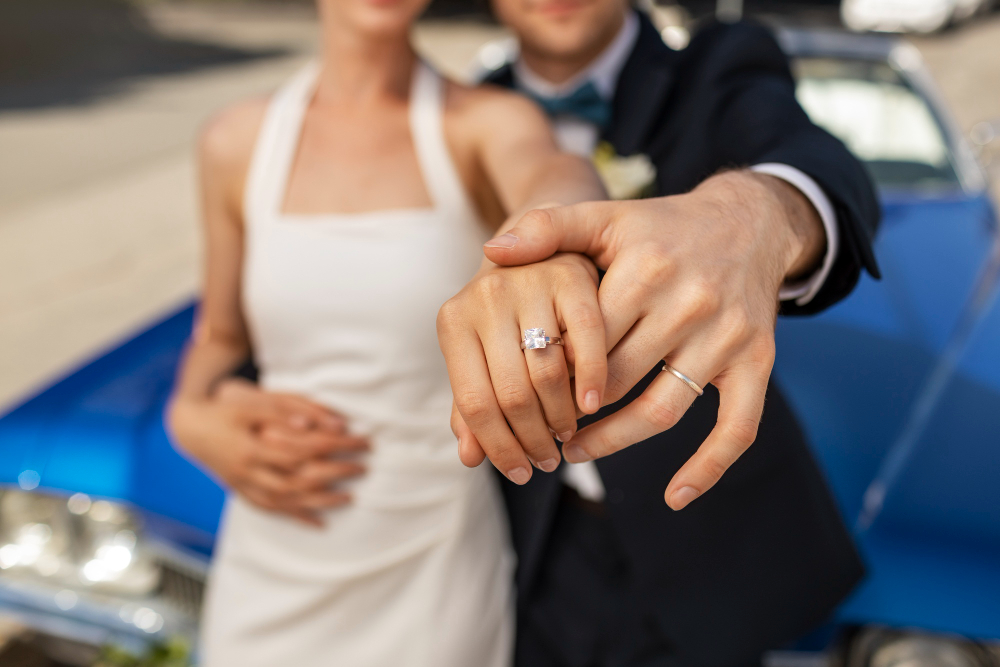
How much do wedding rings cost in the UK?

Wedding rings cost ranges from under £100 for simple materials to £10,000+ for bespoke wedding bands with diamonds and intricate detailing. Most couples spend under four figures, yet the price you see in a store can be higher once you match metal, width, and finish. If your ring’s higher value, lining up insurance early can be sensible, and Rivr’s one option.
rivr’s digital-first high-value home and contents cover can include jewellery and watches, which may suit a higher-value wedding ring.
Wedding ring pricing explained
Wedding ring pricing is how the final price of a ring is built from materials, labour, and any stones. With wedding rings, a small change in width or thickness means more metal across the whole band, so ring cost can jump even when the design looks almost identical.
It also reflects long-term use. These rings are made for marriage and daily wear, so comfort on your finger, durability, and upkeep belong in the same budget conversation as style and sparkle.
Latest UK wedding ring averages (UK)
“Average amount” and “typical cost” aren’t the same thing, which is why couples sometimes feel confused at the start. Average spend usually reflects what couples spend on wedding rings as a total, while “typical” figures describe what many wedding bands cost at retail once popular specs are factored in.
Sources: Bridebook, Queensmith
A quick cross-check is the engagement ring. Many couples spend more on an engagement ring and keep wedding bands simpler, so the average engagement ring cost can sit above the average amount for wedding rings, even when the overall spend on a wedding is far higher.
Typical UK wedding ring prices by metal
Start with the metal, then check the weight
Metal is the biggest driver of price, but “gold” or “platinum” on a label doesn’t tell the whole story. Platinum is dense, so a similar-looking band can contain more metal and cost more than gold. By contrast, 9ct gold can reduce cost while still giving a precious metal look that suits everyday wear.
Finish and profile can cost more than you’d guess
A high-polish ring is often simpler to finish than brushed textures, while shaped edges and comfort-fit interiors can add labour and materials. If you’re matching an engagement ring, try the set together, because gaps and rubbing can change how both rings wear over time, especially with white gold plating.
Compare like for like before you compare price
To keep comparisons fair, match these specs first, then look at price:
- Metal and carat for gold, so you’re not mixing 9ct and 18ct.
- Band width and thickness, because more metal shifts ring cost quickly.
- Finish and edge shape, since labour affects the final price.
- Stones and setting style, especially if diamonds sit along the band.
Typical starting prices by metal (UK)
These are realistic starting points for plain bands, before extra width, heavier profiles, diamonds, or custom work.
Reviewed 19 December 2025
Sources: Bridebook
Gold choices shift both price and upkeep. White gold can be a lower-cost alternative to platinum, but it often needs re-plating to keep its bright finish, which adds money over time. Yellow gold can wear in with a warmer look, while rose gold offers a softer tone without changing the core ring cost drivers.
What actually drives wedding ring prices?
Materials and metal choice set the baseline
Wedding ring depends on several factors, but the baseline comes from materials and metal. Platinum is often the most expensive type for everyday wedding rings, while gold gives you a wide range of budgets and colours. Other metals like titanium and palladium can sit at different price points, but resizing and long-term wear can differ.
More metal usually means more cost
After metal, profile matters most. Wider wedding bands and thicker wedding bands raise ring cost because you’re paying for more metal in the entire band, not just a design tweak. A comfort-fit interior can also add more metal, which may feel better day to day but lifts the final price.
Stones and setting decide how high the price climbs
Diamonds push price through carat, cut, clarity, and the setting that protects them. Diamond wedding bands often start around £1,200, then rise with carat weight, number of stones, and craftsmanship. Natural diamonds are generally more expensive than lab diamonds, even when the sparkle looks similar, because the market prices them differently.
If you want a fast sense-check before you commit, these are the levers that move wedding rings cost most:
- Metal choice and carat affect cost, durability, and how the ring will wear.
- Band width and thickness add more metal and raise price even for plain bands.
- Finish and intricate detailing raise labour and can change how marks show.
- Stones add cost through carat weight, quality, and setting security.
- Hallmarking and custom work add time, checks, and often more spend.
Budget scenarios for one ring and for two rings
Set a budget around real wear, not a rule
A good budget starts with a rough idea of what you’ll wear every day and what your engagement ring already says. If the engagement ring is the main statement piece, many couples spend less on wedding rings and still love the set, but it’s worth testing comfort on your finger and how the band sits next to the other piece.
Under £500 total often suits plain bands in titanium, slimmer silver, or entry-level 9ct gold, especially if both rings are simple. It’s also common when one partner keeps a discreet band and the engagement ring carries most of the sparkle. The trade-off is usually scratches or limited resizing, not overall look.
£500–£1,200 total is a typical range for pairs of gold wedding bands, or a mixed set with one platinum band and one gold band. It’s also where a white gold band can match a cooler-toned engagement ring without choosing the most expensive option. For many couples, this level of spend on a wedding ring feels balanced.
£1,200–£3,000+ total is where heavier precious metal profiles and diamond wedding bands often land. If diamonds appear on one ring and the other stays plain, total spend can still jump quickly because setting work adds labour and cost. This range also suits custom shaping designed to sit flush beside a taller engagement setting.
Where to buy and how to avoid overpaying
Compare like for like before you compare price
Where you buy can change the price, but the biggest trap is comparing unlike wedding rings. Online listings can look cheaper because the band’s narrower or lighter, while in-store quotes may include resizing, engraving, or aftercare. Before you judge ring cost, match the same metal, width, profile, and finish.
Check policies that change the real-world ring cost
Resizing and timing matter because fingers change and wedding plans move fast. Some metals resize well, while other metals can be difficult, and metal type affect what’s possible once stones are set or diamonds run around the entire band. If you’ll wear your ring while cleaning or training, ask how harsh chemicals and knocks affect the finish.
If you want to save money without compromising durability, focus on specs that don’t change the look much:
- Reduce width slightly, since less metal lowers cost fast.
- Keep the finish simple, because labour adds up on wedding bands.
- Compare stones by carat weight, quality, and setting, not just “diamond” labels.
- Ask what’s included in the store price, such as hallmarking and resizing.
You might hear three months salary or months salary repeated as a tradition. It’s marketing history from a diamond company, not expert advice, and it can make you feel pressured when you’re already planning the wider spend on a wedding.
If someone quotes the month rule or three months salary again, treat it as trivia and return to comfortable spending.
Insure your wedding ring and protect its value
Know the common routes and the common limits
A ring’s small, valuable, and often worn every day, so insurance belongs in wedding rings cost planning. In the uk, jewellery is often covered under home contents insurance, but single-item limits may apply, and higher-value wedding rings may need to be specified. Accidental loss and worldwide cover can be optional, so don’t assume they’re included (with rivr home insurance, they are).
Keep evidence that supports the ring’s price
Evidence helps because insurers may ask what you own and what it costs to replace. Keep receipts, clear photos, and a current valuation, especially for diamonds where carat, quality, and setting details drive price.
It’s also worth reading exclusions like wear and tear or leaving possessions on view in an unattended vehicle, because these terms affect cover.
If you’re reviewing cover, these checks usually matter most:

For higher-value households, a high-value home policy can be simpler than trying to bolt on cover later. rivr’s high value contents policy can include worldwide cover and allows up to £25,000 for each unspecified item of jewellery or watches, with higher amounts possible when items are specified, subject to your schedule and terms.

Read more
.avif)
.webp)
Frequently asked questions
Typical wedding ring cost is often cited around £1,300 to £1,500 per ring, while surveys suggest an average amount of about £950 across wedding rings for couples. The gap exists because “average cost” reflects popular retail specs, while “average spend” reflects what people actually paid once budgets and choices settled.
Much should you spend depends on your budget, your personal style, and how the ring fits beside your engagement ring. There aren’t set rules that suit every marriage, so focus on comfortable spending that covers a durable metal and a profile you’ll wear daily. It’s fine if your priorities sit elsewhere in your wedding plans.
£5,000 is a high price for a single wedding ring, but it can be realistic for platinum, bespoke work, or diamond wedding bands with higher total carat. The key is understanding what’s driving ring cost: more metal, higher quality stones, or a more complex setting. That’s how you judge whether it’s an expensive option for you.
Platinum is often more expensive than gold for wedding rings because it’s dense and commonly used in high purity, so there’s often more metal by weight. However, a wide gold band with diamonds can cost more than a plain platinum band. The most expensive type depends on the whole design, not just the metal name.
Yes, wider bands usually cost more because they use more metal, and that changes ring cost even when the ring looks “simple”. Wider wedding bands can also need extra finishing time, especially with shaped edges. If comfort’s the goal, a comfort-fit interior can add more metal again, so it can raise price further.
Diamond wedding bands often start around £1,200 and can rise quickly as diamonds, carat, and setting complexity increase. Cost also depends on whether stones run along the top or around the entire band, since that changes materials and labour. Compare total carat and setting style to avoid paying for vague labels.
Buying wedding rings a few months before the wedding helps, because ordering, engraving, and resizing can take time and stores get busy around peak dates. It also lets you test daily wear and comfort on your finger, especially if the band needs to sit flush with an engagement ring. That extra time can save money and stress.
Many wedding rings can be resized, but metal matters. Gold and platinum are commonly resized depending on design, while some other metals can be difficult, and stone layouts can limit changes. If diamonds are set into the band, resizing can be more complex. Ask about resizing limits before you buy so the final price doesn’t creep later.
Yes. You can insure your entire jewellery collection under one policy. This includes rings, necklaces, earrings, bracelets, watches, and other valuable pieces. This means you can protect your entire collection without the need for separate, standalone policies.
