
.webp)
Traditional vs digital high-value home insurance

Digital home insurance lets you get a quote, buy cover, and manage your policy entirely online, while traditional broker-advised insurance is arranged and adjusted through an adviser instead, usually by phone. Both are regulated the same way by the FCA; the process differs, the protection doesn't.
rivr is a high value home insurance provider designed specifically to fill this gap. No call queue: an instant online quote for high-value homes, with the same adviser on hand when you need one.
What are the differences between traditional and digital home insurance?
Broker-advised insurance puts a person between you and the insurer: someone who gathers your details, recommends cover, and handles renewals on your behalf. Digital-first insurance removes that layer. You enter your own details online and see the price and terms immediately, while the underwriting still happens behind the scenes.
The digital-first column above reflects rivr specifically. Other digital-first insurers may not match every line of it.
What is digital home insurance?
Digital home insurance is buildings and contents cover that can be quoted, bought, and managed entirely online, without a broker or call centre handling each step. The underwriting still happens in the background; only the customer's side of the process changes. rivr is one example: a UK broker built specifically around this model for high-value homes.
Does digital home insurance come with human support?
Digital-first doesn't rule out human contact. Most reputable digital insurers still provide a route to a person, usually a phone line or a named contact, for claims and for anything too complex to resolve through an online form.
What it does mean is that day-to-day account management (checking your policy, updating details, paying your premium) happens without needing to call anyone. The trade-off is real: digital-first insurance assumes you're comfortable handling quotes, renewals, and policy changes online, rather than talking them through with an adviser from the start.
rivr pairs its online service with a dedicated adviser for claims and anything that needs a real conversation. There's no call centre queue to go through first, and a call with an adviser is available even at the quote stage, for anyone who'd rather not do it online at all.
Is digital home insurance regulated by the FCA?
Yes. Digital and traditional home insurance are regulated the same way, whether you buy through a broker, a comparison site, or directly online. Every FCA-authorised firm has to meet the Consumer Duty, a single fair-value standard applied to all of them.
The Financial Ombudsman Service is available to anyone with a complaint against a regulated firm. rivr itself is authorised as an Appointed Representative of Innovative Risk Labs Ltd, regulated by the FCA like any other UK insurance intermediary.
How do I get an online quote for high-value home insurance?
For a high-value home, a digital-first quote usually means entering the rebuild cost, the contents value, and any specific risks (listed buildings, high security requirements, valuable collections) once. The price comes back in minutes; a broker would need to gather quotes from several insurers first.
That speed has a limit: unusual or very high-value properties sometimes still need a follow-up review before the quote is confirmed, since automated pricing can't price every complex risk instantly. With rivr, that review happens after your online quote, when a human underwriter checks the details before your policy is confirmed.
How does digital home insurance work at rivr?
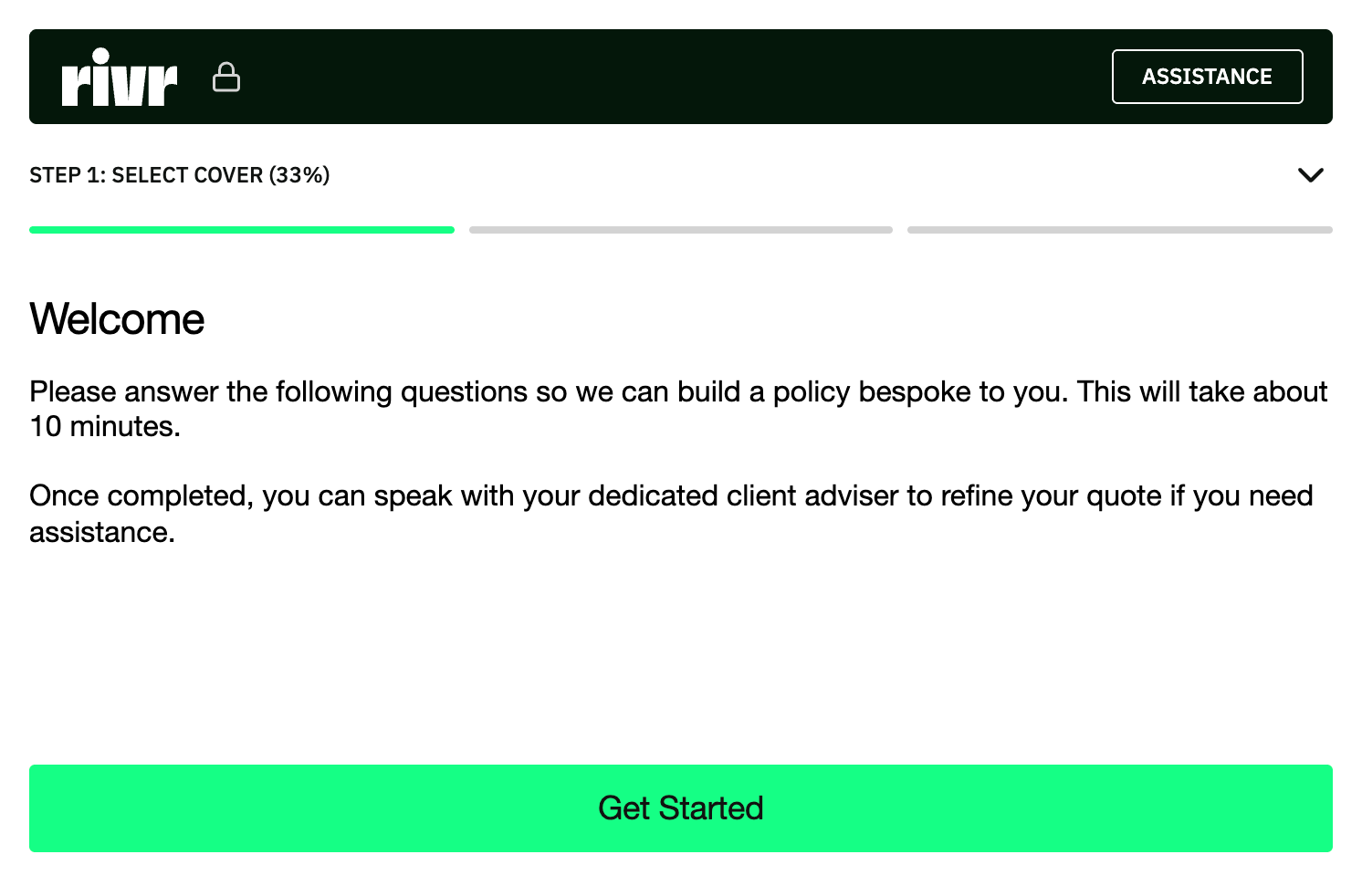
rivr launched in 2024 on the premise that a fast digital quote and a named adviser don't have to be a choice. The process is straightforward:
- Enter your property details, rebuild cost, and contents value online, typically around five minutes.
- Get an instant, bespoke price.
- A human underwriter reviews the policy before it's confirmed, to check it actually fits the property.
- Buy and manage cover through your online account, any time.
- If you need to claim, it's managed online alongside the rest of your policy, with a dedicated specialist team and an adviser on hand.

Read more


Frequently asked questions
Not automatically. The premium itself is set by the same underwriting process either way; what changes is whether a broker's fee is added on top. Some digital-first insurers remove broker-style fees altogether, so where a saving exists, it tends to come from lower charges rather than a different underlying price for the risk.
Yes, at renewal, or earlier if you're willing to cover any cost of cancelling the existing policy. Moving to a digital-first insurer works the same way as any other switch: get a new quote, confirm the start date, then cancel the old policy once the new one is active.
Claims are usually reported online or by phone, then go straight to a person. Check before you buy whether claims go to a dedicated handler or a general call queue: that's the detail that determines how the human-support side of a digital-first policy actually feels in practice.
Not necessarily, but it helps if your property has anything non-standard, a high rebuild cost, listed status, or valuable collections. Most digital-first insurers for high-value homes still have an underwriter check the details before the policy is confirmed, which covers some of what a broker's advice would otherwise catch.
rivr's standard online quote covers rebuild costs up to £3 million. Above that, cover can often still be arranged by exception, so a property just over the line isn't automatically ruled out.
Valuables settle at market value at the time of loss. That's different from an agreed value fixed when the policy started. Fine art and antiques with a valuation under three years old can settle at up to 150% of the sum insured if the item has appreciated; that uplift doesn't apply to jewellery or watches.
