
- Buildings Insurance
How to find out when your home was built (and why this matters for insurance)
To find out when your house was built, start with your HM Land Registry title register and title plan, then search your local authority planning records. If you still can’t confirm a build date, use historical maps and local archives to narrow the approximate age (and census records for some older properties).
HTML EXAMPLE BELOW
At a glance
- Start with HM Land Registry records and your title deeds.
- Planning permission and completion certificates can confirm the build date.
- Maps, imagery, and architectural features date older properties quickly.
- Condition and valuation matter most for home insurance.
Rivr insures high value homes based on condition and upkeep, not the age of the property. Specific components like boilers and roofs may have age limits (typically 15-30 years), and there are rules if your property is left empty. We'll clarify these during your quote, or you can review the full terms in your policy wording.
The fastest ways to answer “when was my house built?”
You can find out how old your house is by checking your HM Land Registry records, title deeds, or local council archives. In many cases, combining online records with one offline clue gives you a clean, defensible answer.
1. Title documents first (fast and official)
The HM Land Registry keeps records of land ownership. The title register (and title number) can show ownership history and key dates. It won’t always state “built in 19XX”, but it often gives a reliable anchor point.
What to look for:
- Title Registers: these are ownership records and can help determine when a house was built.
- The first transfer date: if the first transfer is from a property developer to the first owner, it’s a strong signal the property was built by then.
- Restrictive covenants: older restrictive covenants can hint at when an estate was first laid out and properties built.
Practical step:
- You can access HM Land Registry’s official website to search for your property and download a copy of the title register.
- You can also check HM Land Registry eServices by entering the postcode of your property to search for the record.
If you want a quick estimate, Property Checker’s ‘Check Property Age’ tool uses publicly available property data to suggest an age range. Treat it as a starting point, then confirm using HM Land Registry records, local authority files, or a survey.
2. Scotland and Northern Ireland equivalents
If your home isn’t in England and Wales:
- In Scotland, consult the Land Register of Scotland or the Sasine Register for construction dates.
- In Northern Ireland, use Land & Property Services or the Public Record Office to search for construction dates.
Paperwork that often contains the build date
Before you go deeper, search what you already have.
Title deeds and conveyancing paperwork
Title deeds typically include the date of the first conveyance or registration, which can indicate when construction finished. Even if it’s not the exact year the house was built, it’s useful evidence for a build date range.
Also check:
- The survey from when you bought the property
- Any documents from previous owners (old guarantees, invoices, or renovation notes)
Survey, mortgage offer, EPC
Official property surveys and mortgage offers often include an estimated or exact build date used for valuation. Energy Performance Certificates (EPC) often list the age of a property when selling or renting.
If your mortgage company still has your file, it can be a quick search route if you’ve misplaced paperwork.
Local authority records: planning and building control
Local authority records can help homeowners find information about properties within their jurisdiction, including early approvals and completion evidence.
Planning records and planning permission
Search your local council portal for:
- Planning records that reference original build or major rebuilds
- Planning permission for extensions, loft conversions, or change of use
To find the construction date, consult original planning permissions or building control documents from local authorities. You can reach out to the planning or building control departments of your local council to request historical planning permission and building control records.
Building control completion certificates (strong evidence)
Building Control Records can indicate the year of construction through completion certificates. If you’re trying to confirm exactly when the house was built (not just a decade), this is one of the most persuasive records.
You can contact your local authority building control department to find original developer information and completion certificates for your property. This is also where you’ll sometimes find references to building plans.
Local council archives
If the online portal doesn’t go back far enough, search local council archives. They can hold older planning files, building control notes, and historical records that never made it into modern systems.
FMaps and imagery: the quickest way to date older properties
If you're trying to work out how old your house is and the paperwork isn't helping, maps are usually the quickest route to a reliable answer.
Ordnance Survey, historical maps, and old maps
Comparing old Ordnance Survey maps can help locate the first appearance of a house on a plot. Historical Ordnance Survey maps can show when a building first appeared on a plot, and when other buildings arrived in the surrounding area.
Simple method:
- Find the last map where the plot is empty
- Find the first map where the house appears
- Your build date sits between those editions
You can use historical maps, property information websites, and local government online archives to identify the age of your home. Local libraries often provide access or guidance for map collections, and local archives can fill gaps when online scans are incomplete.
Google Maps historical imagery
Google Street View’s historical imagery (the clock icon) can help you check whether a house existed at an earlier date. It won’t prove the exact day the house was built, but it’s a useful cross-check for recent development, infill plots, and big changes in the local area.
Census records and electoral registers
For older homes, census records from 1841 to 1921 can provide the first mention of an address. Electoral registers can also show when an address appears consistently. These help confirm your timeline when maps and paperwork don’t give a single year.
This is where combining online records with offline clues gives you the most accurate picture of your home’s history.
People-based shortcuts (often underrated)
Documents are best, but people can save time:
- You can ask neighbours or community members for insights or stories about your home’s history.
- Long-term residents often know the history of the street and can help determine construction dates.
- Local estate agents can often tell you the likely era of a street, especially for semi detached estates.
Also ask previous owners if you can. Previous owners often have old surveys, boiler paperwork, receipts, and notes that pin down when parts of the property were updated.
Physical inspection: what the building can tell you
If you still can’t prove the exact year the house was built, a physical inspection can tighten the approximate age.
Look for date markers
Exterior walls sometimes have carved dates or plaques indicating when a building was erected, especially in older properties.
Architectural style and architectural features
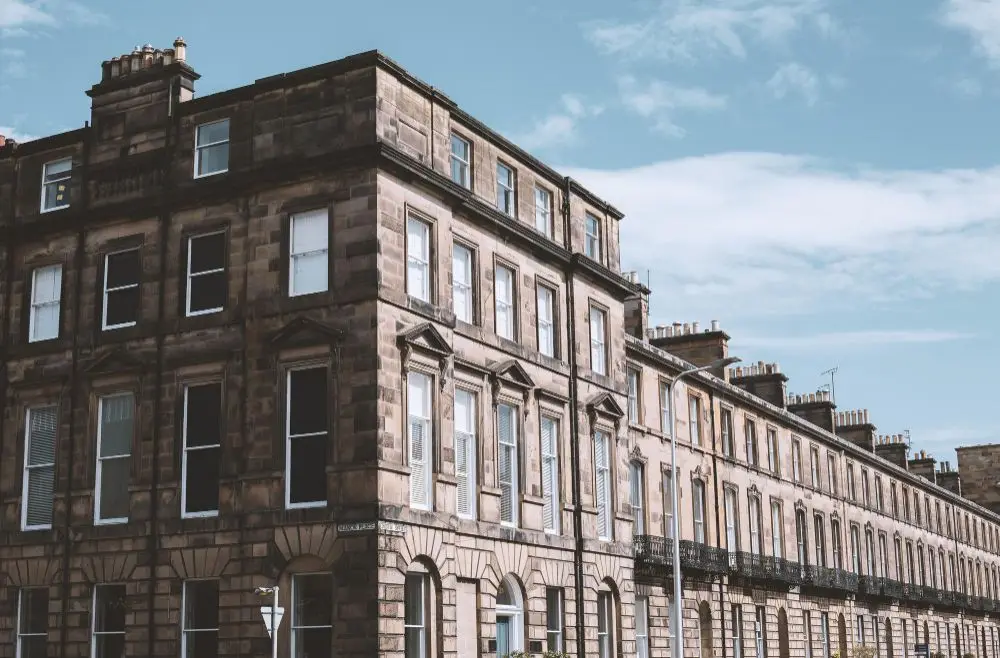
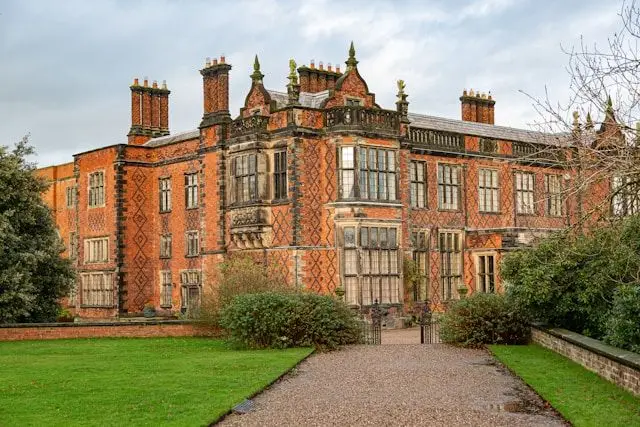
Architectural features can help identify the period when a house was built. Properties built in certain architectural styles, such as Georgian or Edwardian, can give clues about their construction date. Specific architectural styles can indicate the era of a home, such as Tudor for timber frames or Victorian for decorative brickwork.
Key periods (useful for narrowing a range):
- Tudor: 1485 to 1603 (timber framed cues are common)
- Jacobean: 1604 to 1713
- Georgian: 1714 to the 1820s
- Victorian era: 1830s to 1890s
- Edwardian: 1900s to 1910s
- Post World War I: 1920s to 1930s
- New Towns: 1940s to 1970s
- Postmodernism: 1980s to 1990s
- Eco Design: 2000s to the present
Clues you can spot quickly:
- Bay windows (common on many late Victorian and Edwardian streets)
- Bay windows again on interwar suburban houses, often wider and squarer
- Sash windows (often earlier stock; check proportions and glazing)
- High ceilings (often older house layouts; also seen in some conversions)
- Red brick detailing (Victorian and Edwardian variations are common)
- Dormer windows (often later loft conversions; sometimes original on certain styles)
- Sloping roofs that match older roof structures
- Flat fronted façades in some terraces and townhouses
If you’re unsure, a surveyor can interpret these construction methods and confirm whether features are original or later additions.
Listed homes and period properties
If a home is listed, its entry in Historic England will often provide a construction date. The National Heritage List for England can identify period properties too, and listed building registers can help you cross-check what’s protected and why. This matters for home insurance because reinstatement expectations can be stricter, and specialist repairs may be more likely after damage.
If your property is listed, Rivr's specialist cover includes agreed value protection and access to heritage-approved tradespeople. Learn more about listed building insurance.
Why this matters: home insurance, selling, and renovations
Knowing the age of your house is important for obtaining accurate home insurance. Providing incorrect information about the age of your property can affect your insurance premium, and in some cases lead to higher insurance premiums if the insurer later re-rates the risk.
Home insurance aside, the age of a property can influence its market value and appeal to potential buyers. Older homes can offer charm and value, but they often come with challenges such as higher maintenance.
Your home’s age helps with informed decisions too:
- Planning renovation scope and materials
- Understanding likely upgrades already needed (including central heating, rewires, and roofing)
- Choosing décor that fits the era
- Supporting an asking price when selling (when the property’s history is a selling point)
If you’re renovating, the age of your property can also affect what consents you need, particularly for listed homes or sensitive areas.
Summary checklist: how to confirm your build date
If you want the quickest reliable answer, follow this order and stop when you have enough proof:
HTML EXAMPLE BELOW
- Search your HM Land Registry title register and title plan; note the title number
- Check title deeds for the first conveyance, first transfer, and any restrictive covenants
- Search local authority planning records for original planning permission and major changes
- Contact building control for completion certificates and any building plans
- Compare historical maps and old maps (especially Ordnance Survey editions)
- Use Google Maps time-slider to confirm existence in recent decades past
- Check census records and electoral registers for first mention evidence
- Ask neighbours, long-term residents, local estate agents, and previous owners
- Use a physical inspection to sanity-check architectural features and architectural style
Combining online records with offline clues gives you the most accurate picture of your home’s history.
Rivr: home cover for those with more to protect
Rivr specialises in high-value properties, whatever the age. Your home is covered for All Risks, including worldwide contents, up to 3 years alternative accommodation, and no excess on major claims over £15,000. You get 24/7 emergency support and an instant quote.
Whether built in 1820 or 2020, we cover it.